
You know that feeling when everyone at a party is having the time of their lives, and then someone walks in and says the cops are on their way? That’s pretty much what’s happening in the AI world right now.
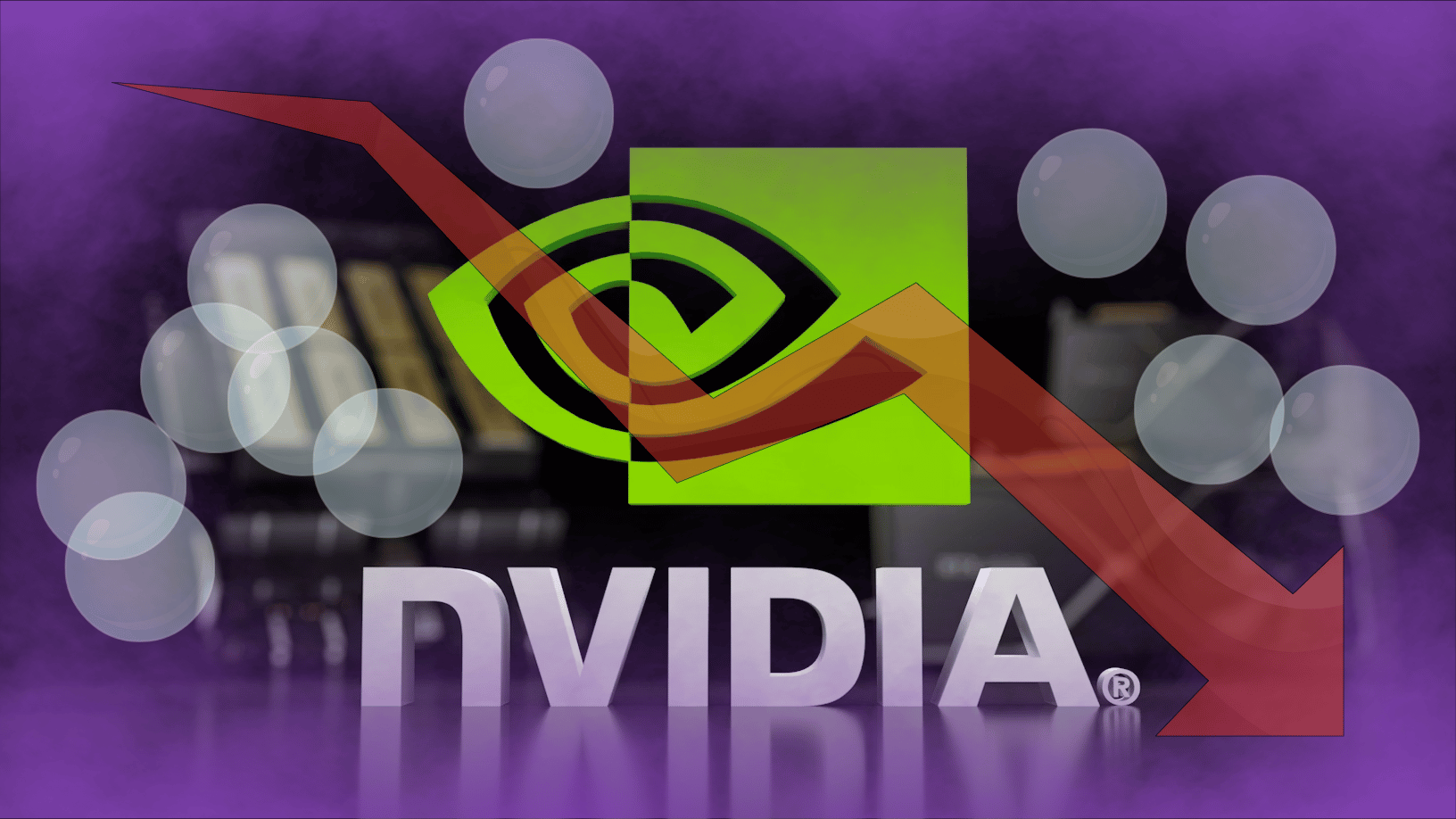
NVIDIA, the chip giant that’s been riding the AI wave to astronomical heights, just went through one of its roughest weeks in recent memory. And it’s got everyone asking the same question: are we watching an AI bubble inflate right before our eyes?
NVIDIA’s Wild Ride
Let’s talk numbers for a second. NVIDIA hit an all-time high back in November, with the stock climbing over 40% for the year. The company became the world’s most valuable company at one point, which is pretty wild for a chipmaker. Their earnings? Absolutely crushing it. Revenue’s been soaring, and everyone wanted a piece of the action.
Then things got interesting.
The stock dropped over 7% in a single week in early November, wiping out hundreds of billions in market value. Even after delivering blockbuster earnings that beat expectations, the stock kept sliding. We’re talking about a company that reported phenomenal growth, and the market basically shrugged and said, “Yeah, but what have you done for me lately?”
More recently, things got even wilder. NVIDIA lost nearly $600 billion in market value in a single day back in January when concerns about Chinese AI competition hit the news. That’s not a typo. Six hundred billion. In one day.
Enter Michael Burry: The Big Short Guy
Remember “The Big Short”? That movie about the guy who bet against the housing market before it crashed in 2008 and made a fortune? Yeah, that guy is Michael Burry, and he’s back with some strong opinions about AI.
Burry just dumped over $1 billion into bets against AI stocks. Specifically, he’s put $912 million in put options against Palantir and $187 million against NVIDIA. For those not fluent in Wall Street speak, that means he’s betting these stocks will tank.
But here’s where it gets really spicy. Burry’s not just quietly making his bets and moving on. He’s been calling out the entire AI industry on social media, accusing major tech companies of what he calls “one of the more common frauds of the modern era.”
The Accounting Drama
Burry’s pointing fingers at companies like Meta and Oracle, saying they’re playing games with depreciation. Here’s the deal: when you buy expensive AI chips (which cost tens of thousands each), you’re supposed to spread that cost over the chip’s useful life. If a chip realistically lasts three years but you say it lasts six years, your profits look way better on paper than they actually are.
He claims Big Tech will understate depreciation by $176 billion over 2026-2028. That would inflate profits by over 20% at some companies. Meta even changed its depreciation schedule in 2025, extending the useful life of servers from five years to 5.5 years. Small change? Maybe. But when you’re spending hundreds of billions on AI infrastructure, that “small change” moves serious money around.
The Backlash
Not everyone’s buying what Burry’s selling. Palantir CEO Alex Karp called Burry’s bet “batshit crazy” on CNBC. His argument? The companies that Burry is shorting (NVIDIA and Palantir) are actually the ones making all the money. “The idea that chips and ontology are what you want to short is super weird,” Karp said.
And honestly, he’s got a point. Palantir just posted 63% revenue growth. NVIDIA’s still dominating the AI chip market. These aren’t failing companies we’re talking about.
Everyone’s Got Skin in the Game
Here’s what makes this whole situation so crazy: everyone’s betting on something.
Big banks like Goldman Sachs and Morgan Stanley are predicting 10% to 20% market corrections in the next year or two. Meanwhile, other analysts, such as J.P. Morgan and Wedbush, say AI is still in its early days and that the spending boom has years left to run.
Some traders are shorting AI stocks, betting the bubble will pop. Others are going all in, convinced this is just the beginning. It’s like watching a massive poker game where nobody really knows what cards anyone else is holding.
The Reality Check
Let’s look at some numbers that might make you squirm. NVIDIA’s trading at a price-to-earnings ratio of 54. The average for the S&P 500? About 30. Palantir? Try a price-to-sales ratio of 150 or more. To put that in perspective, companies during the dot-com bubble topped out around 30 to 40 before things went sideways.
NVIDIA’s operating margin is at an all-time high of 63%. Sounds great, right? But here’s the thing: those margins are high because demand is insane and supply is tight. When supply catches up (which it always does in the semiconductor world), those prices and margins are going to come back down to earth.
The Study That Got Washington Talking
Here’s where things get really interesting. An MIT study dropped in August 2025 that sent shockwaves through both Wall Street and Washington. The findings? Of 300 companies that invested in generative AI tools, 95% reported zero return on their investments.
Yeah, you read that right. Zero. Return.
We’re talking about $35 to $40 billion in enterprise spending on AI, and almost nothing to show for it. The study, called “The GenAI Divide: State of AI in Business 2025,” was based on 150 interviews with professionals, surveys of 350 employees, and analysis of 300 public AI deployments.
Rep. Alexandria Ocasio-Cortez jumped on these findings, tweeting: “Trump’s economy is being held up by a massive AI bubble. A recent study found that among 300 companies that owned generative AI tools, 95% reported zero return on investment. We will not entertain a bailout of these companies should this bubble pop.”
Trump’s economy is being held up by a massive AI bubble.
A recent study found that of 300 companies that owned generative AI tools, 95% reported zero return on their investments.
We will not entertain a bailout of these companies should this bubble pop. pic.twitter.com/4YlOMfgSah
— Rep. Alexandria Ocasio-Cortez (@RepAOC) November 19, 2025
And honestly? She’s got a point worth considering. When 95% of companies are getting nothing back from their AI investments, that’s not just a few bad implementations. That’s a systemic problem.
Why Are Companies Failing With AI?
The MIT researchers found that most AI pilot programs fail because of “brittle workflows, lack of contextual learning, and misalignment with day-to-day operations.” Translation: the AI tools don’t actually fit into how companies work.
Here’s what’s wild: companies are spending over 50% of their AI budgets on sales and marketing tools. But you know where the actual returns are coming from? Back-office automation. The boring stuff. Companies that used AI to eliminate outsourcing and slash external creative costs were seeing annual savings of $2 to $10 million.
Companies that bought AI tools from vendors had a 66% success rate. Companies that tried to build their own? Only a 33% success rate. But guess which approach most companies are still pursuing? The expensive internal development that keeps failing.
One manufacturing COO put it bluntly: “The hype on LinkedIn says everything has changed, but in our operations, nothing fundamental has shifted. We’re processing some contracts faster, but that’s all that has changed.”
The Bailout Question
AOC’s mention of bailouts isn’t random fearmongering. Remember 2008? When the housing bubble popped, taxpayers ended up footing the bill for Wall Street’s bad bets. The concern here is similar: if Big Tech has been pumping up valuations based on AI hype, and those valuations crash, who’s left holding the bag?
Tech stocks made up over 90% of the S&P 500’s gains in October 2025. If AI turns out to be more hype than substance for most companies, that’s not just a tech problem. That’s an entire market problem.
The Circular Money Problem
One analyst pointed out something pretty wild: there may be a circular funding loop in AI. NVIDIA gives money to xAI. xAI borrows billions to buy NVIDIA chips. Microsoft gives billions to OpenAI. OpenAI commits billions to buy Microsoft cloud services. Microsoft orders billions of NVIDIA chips for that cloud.
See what’s happening? The same dollars are circling through different companies and getting counted as revenue multiple times. It looks like explosive growth, but is it actually sustainable growth? That’s the million (or should we say trillion) dollar question.
The Historical Pattern
Here’s something worth noting: NVIDIA has crashed before. Since going public in 1999, the stock has seen four major crashes of 50% or more: in 2001, 2008, 2018, and 2022. Just three years ago, people didn’t want anything to do with NVIDIA. Now it’s the hottest stock on the planet.
This is how cyclical industries work. Massive boom, then bust, then boom again. The semiconductor business has always been this way. The question isn’t really “will NVIDIA’s stock crash?” It’s more like “when will it crash, and how far will it fall?”
So What’s Actually Happening?
Truth is, nobody really knows for sure. AI is genuinely revolutionary technology. It’s going to change everything, no doubt about it. But that doesn’t mean every company riding the AI wave is worth its current valuation.
OpenAI CEO Sam Altman put it pretty well: “Are we in a phase where investors as a whole are over-excited about AI? My opinion is yes. Is AI the most important thing to happen in a very long time? My opinion is also yes.”
Both things can be true at the same time.
The Real Risk
The scary part? Tech stocks made up over 90% of the S&P 500’s gains in October 2025. When NVIDIA sneezes, the whole market catches a cold. That’s not a healthy situation. It means the entire market is betting that AI will continue to boom without any hiccups.
Meanwhile, Big Tech plans to spend $400 billion this year on AI infrastructure, with projections hitting $3 trillion by 2029. That’s a lot of expensive chips with potentially short shelf lives.
What Now?
Michael Burry’s latest move? He announced he’s closing up his hedge fund and returning capital to investors by the end of the year. Some think he’s admitting defeat. Others think he’s just going private so he can bet against AI without having to report to regulators.
His cryptic message? “On to much better things, November 25.” Classic Burry.
The Bottom Line
Look, predicting when a bubble will pop is basically impossible. People have been calling the AI bubble for over a year now, and stocks just kept climbing. Timing these things is notoriously difficult. Burry himself might be early (which, in investing, is pretty much the same as being wrong).
But the warning signs are definitely there. Sky-high valuations, circular revenue patterns, questionable accounting practices, a market that’s way too dependent on a handful of tech stocks, and now hard data showing 95% of companies getting zero return on AI investments. These aren’t exactly signs of a healthy, sustainable boom.
The political angle adds another layer. When elected officials start talking about not bailing out AI companies, that’s a signal that the bubble conversation has moved beyond just financial analysts and tech nerds. It’s now a mainstream concern.
The reality is this: AI is real, and it’s transformative. But that doesn’t mean every company in the space is worth what the market says it is right now. The MIT study shows that most companies don’t yet know how to use AI effectively. They’re just throwing money at it because everyone else is.
Some companies are going to make investors rich. The 5% that figured out how to actually use AI are already extracting millions in value. But the other 95%? They’re burning through billions with nothing to show for it.
The smart money? It’s not about whether to believe in AI. It’s about being realistic about valuations, understanding the cyclical nature of tech, recognizing that most companies are failing at AI implementation, and not betting the farm on the idea that this time is different.
Because here’s the thing about bubbles: everyone thinks “this time is different” right up until it pops. And then suddenly, it all makes sense in hindsight.
Just ask anyone who was around for the dot-com crash. Or the housing bubble. Or literally any bubble in history. There’s always data that looks amazing right up until it doesn’t.
The party might keep going for a while yet. But when someone like Michael Burry shows up saying the cops are on their way, when MIT publishes studies showing 95% failure rates, and when politicians start positioning themselves against bailouts? Maybe it’s worth at least checking how close you are to the exit.